
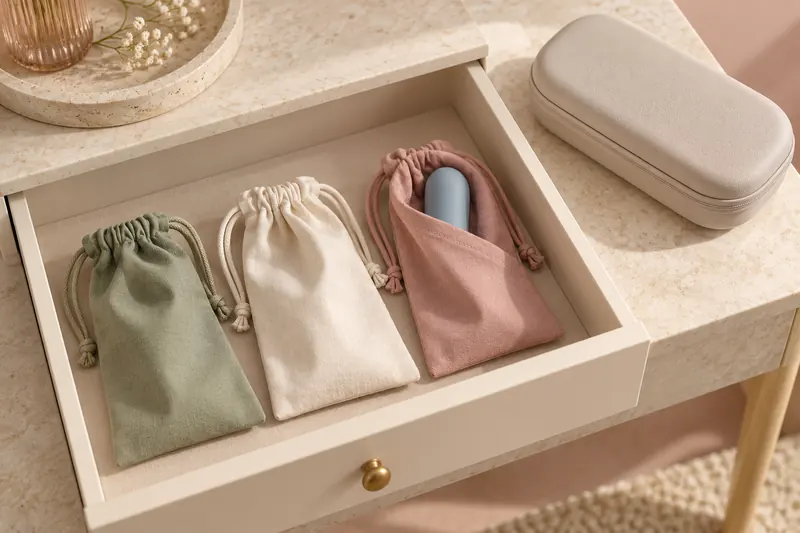
Based on manufacturer guidance and relevant safety sources, store toys clean, completely dry and separated from one another. A suitable individual pouch or case can help protect against dust, scratches and material contact. Keep the collection away from heat and direct sunlight.
Pros & Cons
Pros
- Separate bags reduce dust, lint, and material-to-material contact.
- A charging checklist prevents dead batteries and moisture around magnetic contacts.
- Compact storage makes discretion easier without crushing softer toys.
Cons
- Airtight plastic boxes can trap moisture if toys are stored before fully drying.
- Soft TPE and jelly-style toys can mark, cling, or react when stored against other materials.
- Large toys need more space than most bedside organizers provide.
How we researched this
We researched manufacturer storage instructions and compared the practical uses of pouches, rigid cases, drawer dividers and locking boxes. This guide describes storage considerations rather than results from dust, moisture or impact tests.
In-Depth Analysis & Feature Breakdown
1. Design, Ergonomics & Material Integrity
Choose storage that separates toys and keeps charging cables organized. A pouch suits many fully dry toys, while a rigid case can offer useful protection for fragile or awkwardly shaped items. Check the manufacturer's packaging and storage advice first.
Choosing a pouch, case or drawer layout
Measure the full toy, including the base and controls, before choosing a pouch or case. Leave enough room to avoid bending or crushing it, and avoid sealing in moisture. Clean storage regularly and check the toy before its next use.
Direct Alternatives & Competitor Comparisons
| Option | Price | Core Feature | Best Used For |
|---|---|---|---|
| Cotton or satin pouch | $3-$12 | Low-cost separate storage | Most dry silicone, glass, steel, and ABS toys |
| Rigid EVA case | $12-$35 | Impact protection | Glass, steel, chargers, and travel |
| Locking storage box | $25-$90 | Privacy and organization | Shared homes and larger collections |
Final Verdict & Buying Advice
Store toys only after they are fully clean and dry, then keep each one in its own pouch or case. Skip loose drawer storage for tacky, porous, glass, or premium motorized toys because dust, impact, and material contact create avoidable wear.